Pages

Showing posts with label virginia capital realty. Show all posts

Tuesday, August 11, 2015

Open House #Success

Our team really kicked butt this weekend! We'd like to thank all the potential buyers that came out to visit, hopefully you'll be making one of these homes your dream one! ‪#‎success‬ ‪#‎realestate‬ ‪#‎rhondahowlett‬ ‪#‎vacapitalrealty‬ ‪#‎rva‬‪#‎rvanews‬ ‪#‎realtor4life‬

To learn more about these listings or any listing that we currently have available for purchase, please visit our Properties Page


Wednesday, July 1, 2015

Work Smarter, Not Harder: Part 2


     Whether you’re going for a conventional loan or FHA, it costs time and money to find the perfect house.  Last week I shared a tip on how to spot asbestos siding before spending money on an inspection.  This week I’ll share a few more things to look for and what it could mean for your contract before shelling out a penny.

     Lead-based paint is found in almost all older homes and may be present in any home built before 1978.  It peels in a very specific way, with vertical and horizontal peeling, creating peeling “squares.”  In most cases it will be painted over, which is a perfectly safe and legitimate way to mitigate the problem.  In an “as is” sale, such as a foreclosure, any exposed lead-based paint will not pass inspection.

     Any peeling paint or wood rot on the exterior of the home won't pass an inspection, either.  If it is very minimal, it may or may not be noted on the inspection, but is an inexpensive fix.  Repairing the peeling paint or wood rot on the exterior will be a requirement for any FHA loan.

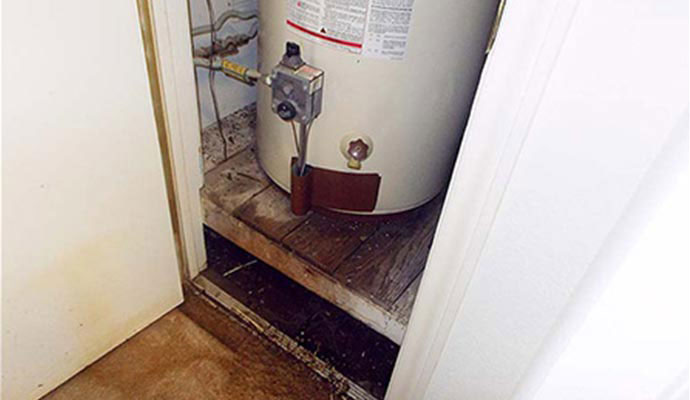
          Seek out the hot water heater in the house.  Before you move into the home, purchase a pan and place it under to see if there are any leaks.  This is especially important if it’s located on an upper floor because any leaks will tear through the ceiling quickly.  Check for water damage indicated by dark spots showing on the floor or ceiling.

     Some of these things may seem like plain common sense, but as a potential buyer, it’s hard not to get excited when looking at a home.  Focus on the practical first, then start imagining your life within those walls once they meet your (and your bank’s) criteria.  


Friday, June 26, 2015

Pre-Inspection Home Dissection


    When I first became a real estate agent, I would write offers left and right— hungry to get my clients the house they wanted.  But with experience I learned how to work smarter, not harder.  The first year I was an agent I would say that I wrote offers on about 8 to 10 houses that got released because of the inspection findings.  It was that year I put together a guide on things to look for when walking through a home.  There are always going to be issues you can’t catch on your own, perhaps under the house, that only an inspector can find.  But before writing a contract, before getting an inspection, before wasting anyone’s time and money, I’ll share a few things to look for starting with asbestos siding.
     It is mostly found in older homes built between the 40s and 60s.  It is very flat siding with vertical ripples running down to wavy edges.  If you see this style of siding it is 100 percent of the time asbestos.  When looking for asbestos in an older home, it’s important to walk all the way around the house.  Often it is covered up with vinyl siding except for say, a screened-in porch or an addition. 

     Before you even make the trip out to see the potential house, check the MLA sheet.  Most of the time it will tell you if it’s asbestos siding, or will at least denote “other."  If you know you qualify for an FHA loan, unless you want to get a very expensive renovation loan, it’s usually best to move on to the next house.  There are ways to remediate the problem if the siding is perfectly intact.   The asbestos siding can be sealed and then covered with vinyl to properly protect it. If any of the siding is broken, it can be very expensive to remove it due to health and environmental implications.
     Another thing to consider is resale value.  If you have a conventional loan and bypass all the requirements of an FHA, when you go to resell, asbestos siding can become an issue.  Even if it’s not a concern of yours at the present moment, it can be one for a potential buyer.

     If you educate yourself on the basics, you can do your own pre-inspection before spending hundreds of dollars to have someone tell you what’s in plain sight.  Next week, I’ll share a few more tips!  

Wednesday, June 10, 2015

Home Restoration: Church Hill Virginia


Check out our latest project in conjunction with Cobblestone Development Group. We've also included some "before" pictures of the property. Tour of the property coming soon...


Make sure to visit my site www.RhondaHowlett.com and also check out www.CobbleStoneDG.com for more information. 

Thursday, June 4, 2015

Good Investment, Bad Investment


     Some people want to buy a house that is already perfect for them, meets all their needs and they don’t have to do anything at all to improve it besides paint a wall or two.  But for most people, the best quality in a home is potential.  They’d like to mold it into something spectacular in hopes their investment will bring them a sparkling return.  That’s making money work for you.  However, some people get side stepped into thinking any old improvement will get their money back, but it is not so. I’ve put together a few suggestions based on what will maximize return and what will not.  

Good Investment— Kitchens
     This is an area of the home that improving will always come out to your benefit.  Kitchen styles are constantly changing, appliances are always improving.  Compromising between your personal design aesthetic and what will appeal to buyers may give you a guideline when making fixture, appliance, cabinet and countertop decisions.  This type of remodel can span a small to large budget. Just remember that the crazier you go, the less likely you’ll get all of your money back.  If you do decide to go all the way, make it exactly how you want it, because it’s just for you.

Bad Investment— Playrooms. 
      This is a lifestyle decision.  If you have school age children and know you will be staying put for a while, adding a climbing wall or a princess castle will bring hours of entertainment and ignite your child’s imagination.  However, there is no telling if a potential buyer will feel similarly even if they have children, too.  Some might see the space as an office, a home theatre, a place to watch the Super Bowl.  This kind of improvement will most likely have to be undone when you want to sell.  Keeping that in mind can help you decide how permanent you'd like to make that transformation.

Good Investment— Additions. 
     Adding more space to live comfortably and entertain is always a great idea for your home both functionally and for your investment.  It increases square footage and potential in the eyes of a future buyer.  It can tend to be a large expense because of demolition costs, new foundation and additional roofing, so make sure you do it right.

Bad Investment— Small additions. 
     DO NOT just add a few square feet to your home to nudge out a little more space for a bathroom, or to bump out a bedroom.  You will not get your money back, and you will accumulate similar costs as a full-size addition.  You’ll still have to break down walls and lay additional foundation for space that will unlikely recover the cost.

Good Investment— Curb appeal.
      The outside of your home is one of the only ways to attract potential buyers initially.  The exterior is the first thing buyers see when shopping around.  It’s affordable and when done correctly could help you save money on heating a cooling.  Working with what you already have is a good jumping off point, like trimming hedges, mulching, etc.  Or, if your landscaping is already pristine, a fresh coat of paint for your entryway, shutters, or siding, can seriously give your home a facelift.

Bad Investment— Removing features.
     If thinking of investments solely, do not remove features that may prove valuable to potential buyers.  Even if you know you will never use the fireplace, another buyer might see it as a main attraction.
     Other high return renovations to think about are master suites and bathroom updates.  Other poor return investments, but lifestyle improvements are things that cater to your personal interests.  Pools or wine rooms come to mind.

     By all means, make upgrades on your home that will enhance quality of life rather than just focusing on the money, especially if you have growing children and plan on staying there for a while. Just bear in mind that some of those changes may have to be undone when it comes time to put your house on the market competitively. 

Tuesday, May 26, 2015

Lawn Care Tips

A lush lawn is not something the average homeowner thinks about before the Spring.  But once the trees start blooming and your grass isn’t quite coming in how you imagined it; time to hit your local home store.  Here are a few tips and tricks to get the most out of your lawn while it’s still early.

     First and foremost, get local advice pertaining to the growing conditions in your area.  There isn’t one fertilizer, one weed killer or one grass seed that works for every lawn.  Get customized solutions for your region. Talk to an expert at your garden center or call your agricultural extension service.
     Apply a pre-emergent herbicide to your lawn after the second mow of the spring.  This will prevent seeds scattered in previous years from germinating, which is where crabgrass grows from.  As the seeds remain viable for a few years, it’s a good idea to apply the herbicide every spring.  Making a preemptive strike on crabgrass will save you tons of hassle later, trying to fight it back in the heat of summer.
     Don’t over stress about the shady part of your lawn.  Many people over water and over fertilize these shady areas, because it seems that the grass is having trouble growing.  In fact, it’s these measures that prevent it from growing to it’s potential.  Shady areas need less water because the sun doesn’t evaporate it as quickly and less fertilizer because without sun, it doesn’t grow as much.  Cut your fertilizer amount to about half of what you’d use for a sunny spot.
     Cut your lawn the right length.  Cutting your lawn too short can weaken the grass and allow weeds to dominate.  Finding the right length for your grass variety will allow it to grow thick and lush while crowding out more established weeds.  Adjust your lawn mower to the right height for your variety.
     If you’re really having trouble with growing grass, check your soil's pH.  Most home centers sell pH testing kits, however, using an extension service can guarantee more accurate results.  For growing grass, soil needs to be a pH between 6.0 to 7.2.  Add lime to raise the pH, add iron to lower your pH.
     Cut down on your lawn care by planning ahead.  It’s generally recommended that you fertilize four times a year for the best lawn ever, but if you want those results with less work and more cost efficiency all you have to do is fertilize once in the fall!  Fertilizing about 3 weeks before the last mow of the season will give your grass stored nutrients throughout the winter.   It will help feed the growing root system as the temperature cools before the grass becomes dormant.  Those stored nutrients will give your grass a burst of energy come next spring.
     

Having a healthy lawn not only makes your home look great, it becomes an inviting place for your children to play, or the perfect place to have an afternoon picnic.  A healthy lawn is the best weed preventer of all.  A thick lawn crowds out weeds without having to use a lot of chemicals to prevent them. 

Friday, May 15, 2015

Seminar Recap: A Little Bit of Effort Goes a Long Way


     I had a wonderful time, as always, at my marketing seminar yesterday morning.  Thank you for all who came, first timers or multiple attendees, it was great seeing you!  For those who couldn’t make it, here’s just a taste of what I went over, so you can use them in your own business practices.


Don’t stall, make the initial contact.  Follow up as soon as you can with a lead.  The faster you reach out the better the return.  

Leave it open, so they can open up.  Always let the client talk first.  You may be able to help them in more ways than they realize.  Even if they’ve emailed you about something specific, when you make the follow up call ask them how you can help and then listen.

Show one house—no matter what.  A lot of other agents, after finding out a client isn’t pre-approved or doesn’t meet criteria deemed “serious,” stop paying attention.  I say, don’t ignore that opportunity.  That client will remember you as someone that helped them when others had turned them away.  You don’t have to go too far and show them all 10 houses they’re interested in.  Tell them to pick their favorite.

Separate yourself from the competition.   Use product knowledge, like what can save them money, their loan options and subsequently what types of properties they qualify for to set you apart.  Customize their experience and let them know you’re looking out for them, not just the sale.  Also, keep client folders and buyer info sheets.  These will help you maintain accurate information that will put that personal touch on interactions with your clients.

These are just some of the things I went over in the seminar yesterday, of course there are more tips in store.  Hopefully this little morsel will get you to come to my next one!  Can’t wait to see you!  Oh, and maybe Darby and I will have another Rap Battle for your pleasure ;p


Wednesday, May 6, 2015

About Last Night... #OutstandingProductionAwards

My career in Real Estate has not been a long one, but I have set goals every day, month and even year for myself. I won't say that it is easy or that I did it alone because i'd be lying. Real Estate is hard work, you have to be everywhere at once and you have to do some unexpected things - I wear multiple hats, including: relationship counselor, contractor, and financial advisor. I work around the clock, at all times of the day and night - but honestly I couldn't imagine myself doing anything else. 

2014 was especially great. I reached Emerald status with the Richmond Association of Realtors ®. In order to qualify someone has to sell a "Net Volume of 6.0-7.99 Millions Dollars - 53.99 units." The categories are as follow: Silver, Gold, Platinum, Diamond, Emerald and Ruby. I can't wait to see what this year has in store for me and I am making it my personal goal to reach Ruby status by the end of it. So wish me luck every body, it already has been a heck of a year! 


Tuesday, May 5, 2015

Renting Out Vs. Flipping and Selling


     So, you already know that you want to invest in real estate. A lot of investors are looking to buy properties at highly discounted rates that need a little bit of work. Once you buy, is it smarter to flip a property and sell it or would it be better to rent it out? 

     First rule of thumb for any investment is buy at a discount.  Before entering into any financial venture, you want to realistically (not just hopefully, in all around best case scenarios) estimate what your return will be versus what you have to put into the property to get it’s new appraisal value.  When you buy low it puts you at a better leverage point financially to come out on top.  That being said, you want to make sure the low price your getting won’t be undermined by the amount of work and capital you have to put into the property.  Time and condition are two major factors in real estate investment return.  But, getting ahead of myself, before finding the perfect property for it’s purpose, ask yourself what type of investor you want to be.

     Flipping houses and becoming a landlord requires completely different mindsets and temperaments.  It’s similar to the tortoise and the hare.  The hare has tons of boundless energy hopping from one project to the next while the tortoise is satisfied with the stability of monthly cash flow.  In our story, they both win the race. 

     While the biggest impressions of career house flippers is that they’re risk takers, there’s a good amount of risk that goes along with renting as well.  One of the front runners is being able to handle evictions.  If you rent for long enough you will run into this problem eventually and may even be sympathetic to their case.  Single mothers, elderly tenants and every likable character in the book, it's likely you’ll have to evict somebody one day.  Another risk is managing your liability.  Flipping a vacant home carries less liability than if a renter associates an accident or injury to your property.  Handling the liability disputes takes finesse and careful planning.  In many cases, landlords can make their properties into separate entities so one lawsuit doesn’t bring all of your investments down.  Careless or irresponsible tenants aside, as a landlord you will never quite be “on vacation.”  If there is a problem in one of your properties, you need to be available to handle any emergencies.


     With all the risks in mind, it is also important to note that land owning is one of the most historical sources of wealth. Being able to pass the land and business down from one generation to another provides a legacy that you can’t quite get with flipping.  Having a stable flow of income among other investment projects can provide a buffer by quite literally, buying you time.  If you are a young first time investor, perhaps it is not a priority to build your rental portfolio. Indeed, as your investment projects expand, it could provide the mortar for your other capital investments.

Tuesday, April 28, 2015

Donating Is Not Just Money But Also Time


Sometimes we want to do something good for our community but when we're busy and we have a business that is thriving, it may be hard to find the time. The easiest thing you can do, if you are able to, is write a check to a charity. It takes no time to do that and it can also serve as a tax write off. Sometimes, that's just not enough or what's needed. I have said it before but I will say it again, I believe that if I can improve the community that I live in, then i'd be more fulfilled both in my career and in my personal life. Does it feel good? Absolutely, but by helping some of these causes, we're improving the community as a whole - something that we can all benefit from.


As a Realtor, I know that buying a home is an exhilarating feeling for most. There's people who save their whole lives just to be able to buy a house, but for some, it may be a dream that they may never achieve. This is where Richmond Metropolitan Habitat for Humanity comes in, they make affordable housing for those individuals that fall in the low income category and don't have the means.

From their website:

"Habitat for Humanity was founded in 1976 as a non-profit, non-proselytizing Christian housing ministry. Since its inception, Habitat has helped build over 400,000 homes for more than 2 million people around the world.

The Richmond Habitat chapter joined the affordable housing effort in 1986. Since then, we’ve built more than 300 homes for deserving families. Along with our partner families, generous volunteers and donors, we have restored the hope and dignity that poverty housing often strips away."


They not only rely on charitable donations but also in people's time. This is a cause that speaks directly to my industry and therefore felt it was important for me to help them out. Matt and I we're fortunate enough to volunteer at the "Restore" location. This is another source of income for them, in which building and home improvement supplies are donated and they resell them for a discounted price. The donated items sometimes need organizing, cleaning or just stocking. The day that we volunteered there was a lot of other people there offering their time which was very uplifting.

To learn more about this organization and all the good things that they do for Richmond, visit their site by clicking here.


Monday, April 20, 2015

The 4 Keys to a Successful Flip


The one thing that home buying and property investment projects have in common is the amount of preparation you have to do to make sure your experience is a successful one.  Being prepared and informed about what it takes to flip your first house is the first step to a prosperous project.  Everyone has their first flip, even large contracting companies once had their first flip, so don’t be intimidated.  While there may be some unexpected bumps along the way, if you do your research and preparation, there is no reason you’re investment shouldn’t bring you a return.  Follow these best practices to be on your way to finding the right investment for you.

1.     There are still so many distressed properties on the market to snatch up despite the market’s recent boost.  You can take advantage of that, by finding the potential in the homes you’re looking at as investment prospects.  You can find these neglected properties either through auction, or a relationship with a local real estate agent.  You as the investor should be excited when seeing outdated kitchens or worn out carpet as an obvious improvement that will get you a return.  It’s important to get these homes inspected as there could be major underlying problems that may cost you more than you’ll make.  It is also important to understand and respect what’s within your scope to improve.  If you have a good relationship with a contractor, or have DIY skills yourself, it’s important to know whether or not you’re up for an entire gutting of a home, or if just want to handle the updating of things like cabinets and flooring.

2.     Do the numbers and then do them again.  There is only money to be made in your investment if the after repair costs in addition to the purchase price is less than the resale value.  Being solid in knowing what your repair costs will amount to is imperative.  A real estate agent who knows the market and what similar properties in the area have sold for is helpful in calculating the after repair value (ARV).  It is important to build some wiggle room in your budget for unexpected costs, and it’s best for first time flippers to avoid speculation.  Stick to the numbers and you’re more likely to have a return that you expect.

3.     Don’t be afraid to call in a professional.  This is along the lines of knowing what’s within your scope to repair.  Lots of first time flippers have a good understanding either from personal home renovations or from DIY television shows about profitable cosmetic improvements, but look past the technical aspects of a home.  Plumbing repairs, roofing issues, water damage repairs are all improvements that can be costly.  Trying to learn a trade as you go, like electrical, can end up costing you more time and money than hiring a professional.  Make sure you get assessments and bids from multiple contractors.  A real estate agent that is familiar with property investments can usually recommend lots of qualified contractors that they’ve worked with before. 

  
4.     Design your home for resale, not for your taste.  Stay conservative with your colors and hardware choices.  Buying the flashiest accessories might make your home stand out, but not in a good way.  Look at what appeals to the surrounding neighborhood and target your market.  Features such as crown molding, hardwood floors versus carpeting or a kitchen island are all things that can appeal to buyers.  The goal is to sell your beautifully refinished home fast. Including things that appeal to a greater audience can achieve that.


     As long as you’re practical and diligent in your investment, there’s no reason you’ll get in over your head on your first flip.  The main keys are to stick to the numbers and what you know.  There’s no reason you should try to skimp on renovations by doing everything yourself.  Spending that little bit of money by getting the job done right the first time will not only save you stress, but you’ll see it in your return.  After all, that’s the name of the game when it comes to property investment.

Monday, April 6, 2015

As Flowers Bloom, Become A Savvy Buyer


It is a predictable trend that as the flowers start budding and the weather gets sunnier, the more houses get listed on the market.  It’s one of the busiest times of year for buyers and sellers.  While HGTV has made small projects on how to better sell your house common knowledge, there aren’t many shows dedicated to being a savvy buyer.  Make sure you are succesful this Spring by following these simple rules:

1. Have a Professional in Your Corner
          There are a lot of ins and outs of buying a property and you deserve a knowledgable professional to represent your interests throughout the process.  Not only will it make your life easier, but having experience in your corner to deal with negotiations, inspections and paperwork is a valuable asset to home buying.  They’ll notify you of recent additions to the market as well as streamlining the search, eliminating any duds before setting foot out the door.  A good agent will understand market trends and how they will affect your personal home buying goals and save you money in the long run.
  
2. Be Able to Make a Serious Offer
          Understanding your financial profile is key for a seller to entertain your offer on their home.  Getting pre-approved by your lender is the way to be a serious contender in the game.  While there are many mortgage options these days than there ever was, you want to make sure you qualify for the amount you’re budgeting for.  Once you gain pre-approval, you’ll be a heavy hitter when it comes to buying your investment.

3. Prioritize Wants and Needs
          Wants and needs vary by demographic.  Age, marital status, kids, career are all factors that influence where you buy and what kind of home you need.  Outdoor space, ease of commute, good schools are all things to consider when looking for a neighborhood.  Make a checklist of things you need versus what you want and prioritize them.  It’ll make looking at homes an easier experience knowing the things you are not willing to compromise on.  When you’re house hunting remember that you’re also buying into the neighborhood.

4. Incentivize Your Offer
          These days it's not only the sellers who face competition.  You are likely to have to compete with another bidder for your dream home.  If you decide to make an offer on a home, make it stand apart from the rest.  Underbidding is a thing of the past.  There are lots of creative ways to make your offer more attractive by either simplifying the process for the seller or offering more time for them to move out.  You’re agent will know plenty of tricks to make your offer shine above the rest.


As long as you are prepared and proactive about home buying this spring, you’re sure to be a success.  Know what you qualify for and figure out what you want ahead of time, making the decision-making process extremely easy. Having the right person in your corner to ask all the pertinent questions and handle legalities is valuable to your overall experience, also saving you time and money.  They know how to get you what you want!